You Stay in Environments That Don’t Require Growth
Not every environment hurts you. Some simply stop asking more from you. You can stay functional there for years while your stronger self slowly goes unused.
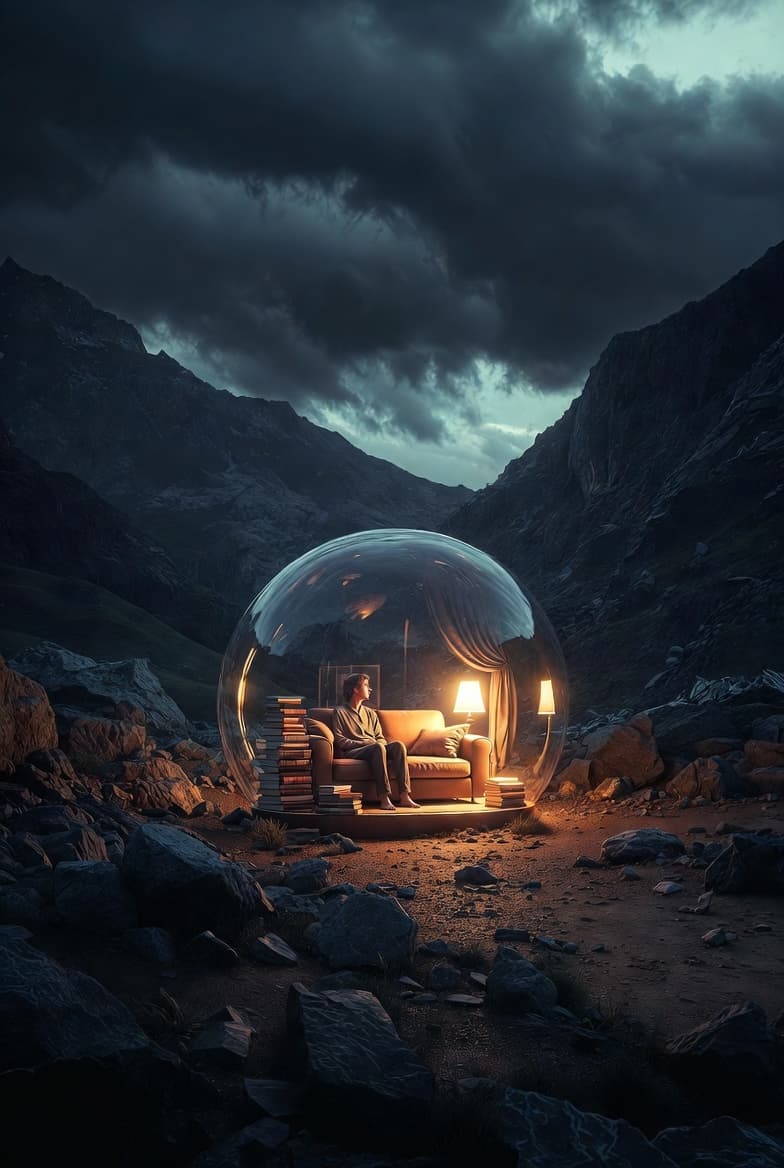
The most dangerous places are not always painful. Sometimes they are just comfortable enough to keep you from leaving.
Nothing pushes you. Nothing stretches you. Nothing demands more truth, more courage, more skill.
So you remain acceptable—and slowly become less alive.
Before state
Before you can name it
That is what makes this hard to detect. Pain would make the decision easier. Comfort lets the slow damage hide.
You are not collapsing, but you are not expanding either.
You feel too comfortable to leave and too underused to feel fully alive.
You can handle your environment, but it no longer calls anything deeper out of you.
You tell yourself things are fine because nothing is visibly wrong.
You feel dull in ways that are hard to explain to other people.
You are surviving in a place that no longer sharpens you.
An environment does not have to be toxic to limit you.
It only has to let you stay the same. If a place asks nothing of your courage, your thinking, your discipline, or your honesty, it may feel peaceful while quietly reducing you.
Loop
The loop that keeps you there
Active pattern
01
Comfort
Comfort lowers urgency
Because the environment is tolerable, you feel no strong reason to leave.
Tap a step to move through the loop.
The longer you stay in a place that does not require growth, the more growth starts feeling unnatural. Then the very thing that could wake you up begins to feel like a threat.
This is how people disappear without ever leaving the room.
Not through failure. Through long periods of underuse.
A life can become smaller without ever looking broken.
Resistance
Why you keep defending it
Objection
But it is stable. Isn’t stability good?
Response
Stability is useful when it supports growth. It becomes dangerous when it replaces it.
Objection
At least this environment is not bad.
Response
That is exactly why people stay too long. The absence of pain is mistaken for the presence of value.
Objection
Maybe I should just be grateful.
Response
Gratitude and truth are not enemies. You can appreciate what protected you and still admit it no longer grows you.
Shift
What changes when you see it
You stop asking whether an environment is merely acceptable. You start asking what it is shaping you into.
Old frame
What you believed
If nothing is wrong, I should stay
Comfort means I am in the right place
Difficulty is a sign that something is off
Shift
A good environment does not just make life easier. It makes growth harder to avoid.
New frame
What is more true
Some places keep you safe by keeping you small
Comfort can be a signal of under-challenge
The right environment does not only accept you—it calls more out of you
Action
What changes in practice
You stop measuring environments only by how peaceful they feel. You start measuring them by what they demand, reveal, and strengthen in you.
Before
Before
Choose places that feel manageable
After
Choose places that make more of you necessary
Before
Before
Stay because it is comfortable
After
Question what your comfort is costing
Before
Before
Judge an environment by how little it disturbs you
After
Judge it by whether it expands your honesty, skill, courage, and standards
Do not only ask, ‘Can I survive here?’ Ask, ‘Who do I become if I stay here another year?’ That question will tell you more than comfort ever will.
You are not here only to be accommodated.
You are not here only to remain comfortable.
You are allowed to choose environments that require your next self.
Once you see it
The real danger was never that the environment would break you. It was that it would let you remain unbuilt.
More from this series